Skip to content
BedfordPark Garage Door ExpertsOpen 24/7 (365) 605-5927
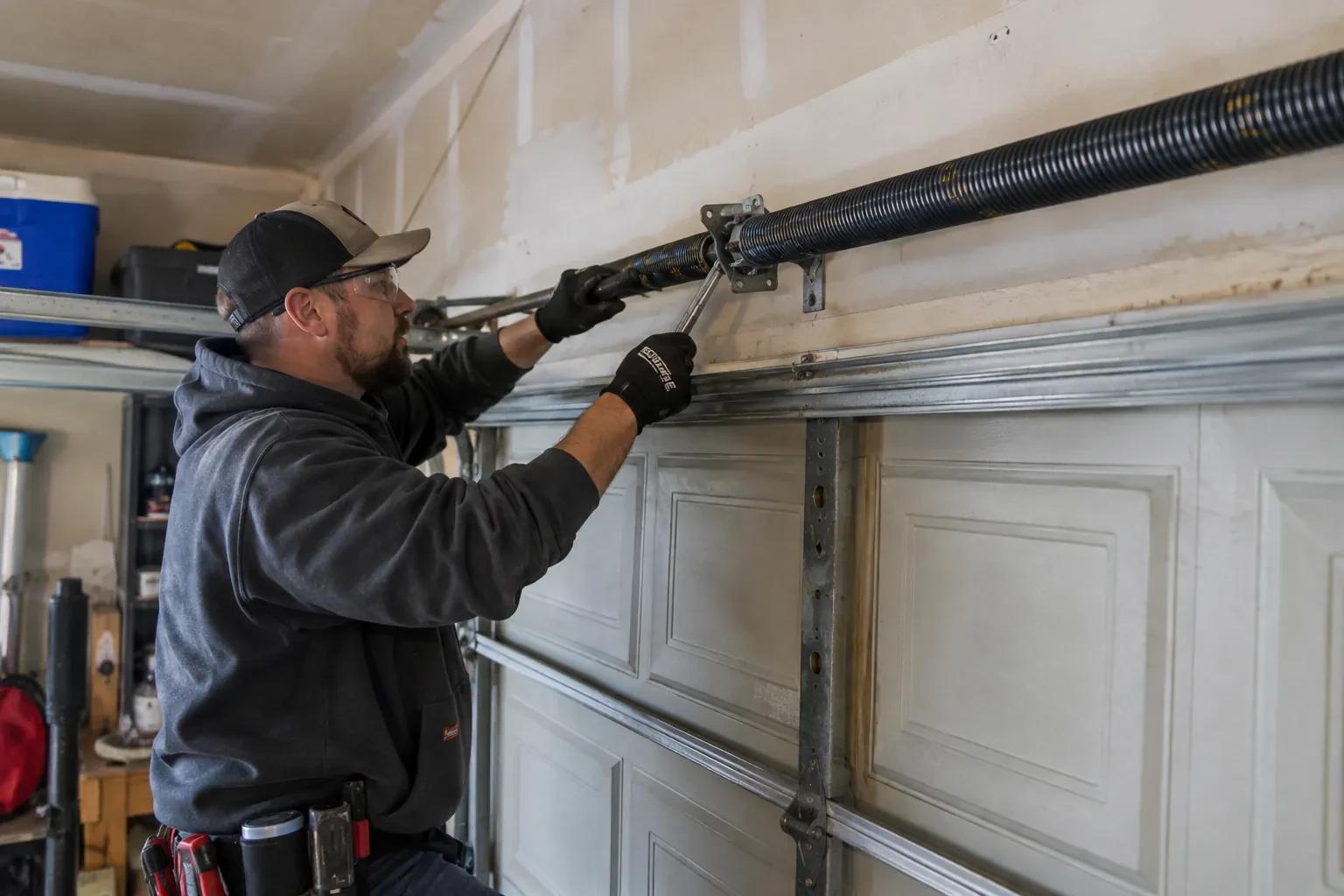
Technician in a black cap holding a wrench to a coiled black spring above a paneled door, with a blue cooler behind.

Openers · Toronto

Emergency Release Repair

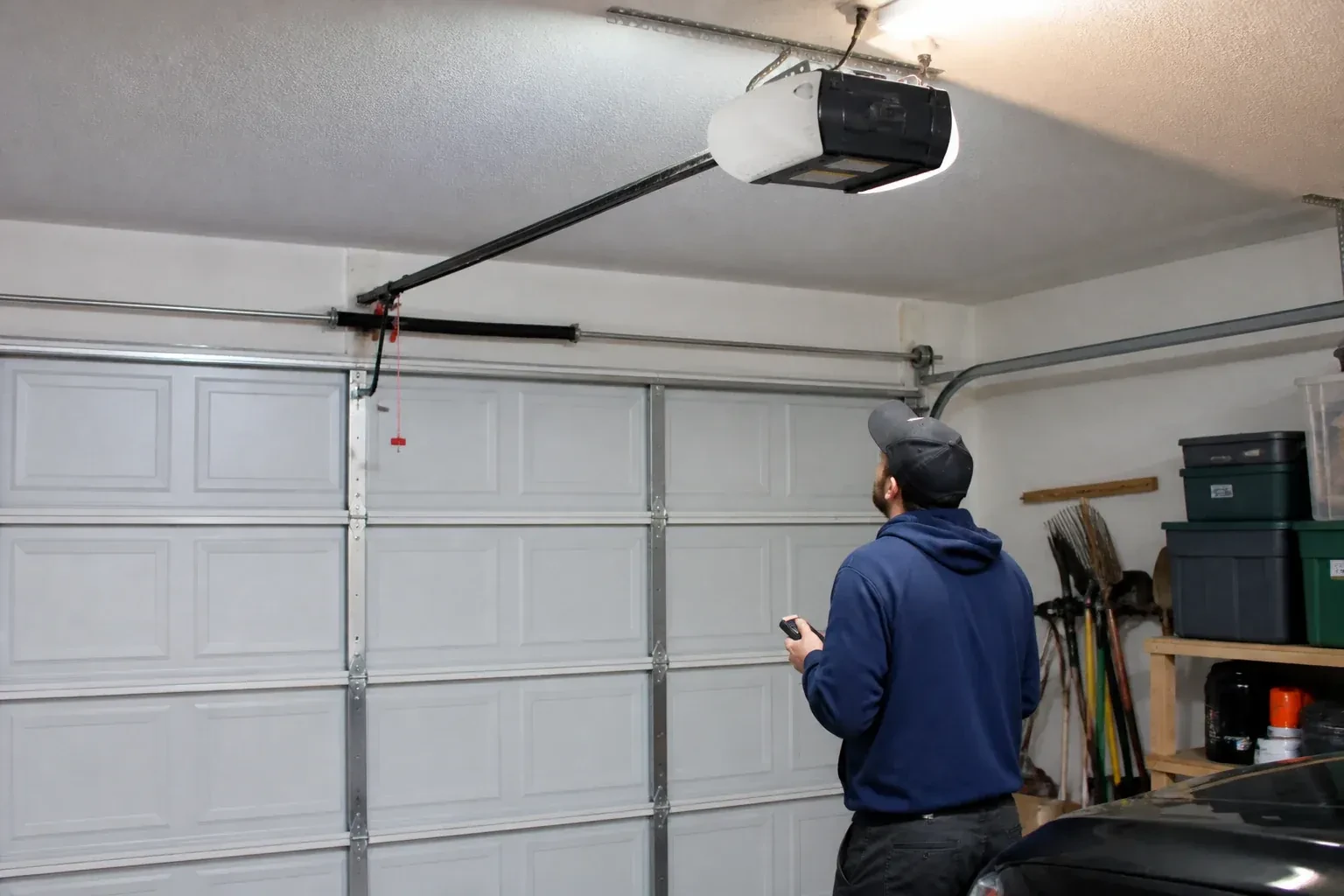
Since the new door went in, the red handle has hung just below the ceiling, a stepladder's height above anyone in the household. During last week's blackout your daughter stood under it with a broom, unable to hook it down.

In plain words

Most households meet the release for the first time in a power outage, usually in winter. The door is shut, the car is inside, and the red handle is the only way to move the door. This service makes that moment go smoothly: a handle that hangs where a person can reach it, a cord strong enough to throw the lever, a trolley that lets go cleanly, and a door that lifts without a fight once it is free. The technician also shows everyone in the house the sequence, including how to hold the trolley out for a few days of manual use and how to reconnect afterwards.

Sound familiar?Toronto

The call
A previous owner knotted the release cord around the rail and stacked storage shelves right beneath it. You only discovered this in the dark, with the power off, a flashlight in your teeth and a car that needed to be somewhere.
NextHow the visit goes

Emergency Release Repair · Toronto

How the visit goes

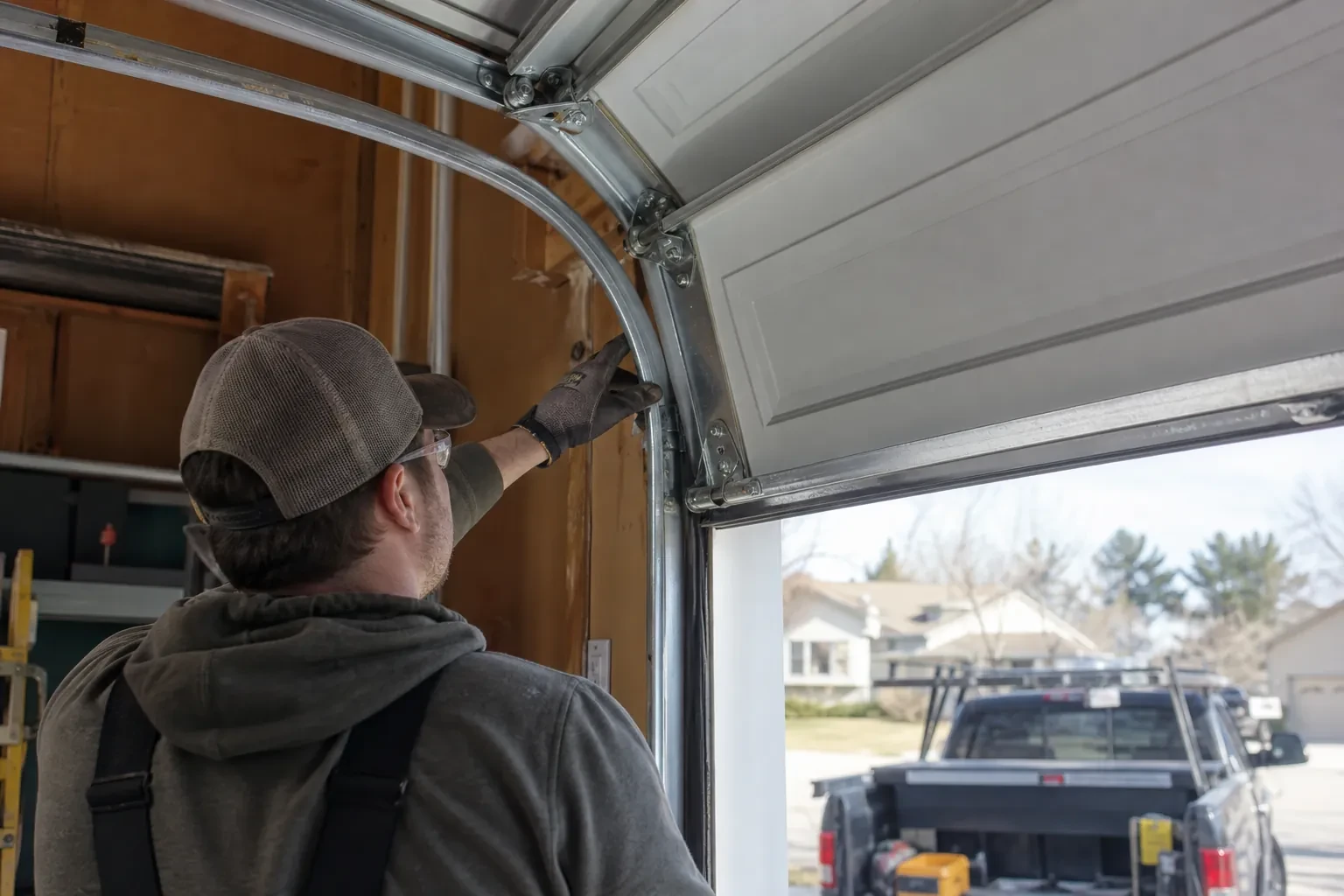
Technician in a mesh cap reaching a gloved hand to the curved door track beside a raised panel, with a pickup outside.
  1. Scene 1

    What kind of opener and rail

    Release designs differ by opener, so the model is identified from its label before parts are chosen. A chain or belt unit on a one-piece rail pulls straight down; on a sectional square rail the cord is pulled down and then back to hold the lever; a screw-drive carriage has its own release; a wall-mounted unit beside the door uses a handle on a cable that clicks rather than a trolley on a rail. Age matters too: an older chain-drive head may take a different trolley from the current one. Knowing the exact unit means the replacement cord, lever, trolley or outside release cable is the one the maker specifies.

  2. Scene 2

    Lever and spring on the trolley

    When the lever throws but will not return, or returns without latching, the fault is in the lever, its pivot pin or its spring. The technician removes the trolley cover, replaces the spring or the lever assembly with the part for that model, and checks that the lever swings cleanly from horizontal to vertical and back with a firm click. A bent lever is replaced rather than straightened, since the metal has already been stressed once. With the door closed the release is pulled and reset several times to confirm the trolley lets go and re-engages each time before the opener is run.

  3. Scene 3

    A record of what was done

    You receive a short note: the opener model, which release parts were replaced, the handle height as set, whether the trolley was freed or renewed, what the travel and tension settings are now, and whether an outside release was fitted. Keep it with the house papers. It tells the next technician what is on the ceiling, gives a buyer confidence the door has been cared for, and saves looking up the model when a replacement rope or key is needed years from now. Old parts are left with you or removed, whichever you prefer.

In the van

  • Trolley and carriage assembly
  • Door arm, clevis pins and clips
  • Outside key release kit (lock, cable, keys)
  • Release lever and spring
  • Track clamps to hold the door

What shapes the quoteBedford Park Garage Door Experts

Cord, lever or trolley
A rope and handle is the smallest item; a lever and spring sits in the middle; a complete trolley or carriage assembly is the larger part, and the diagnosis says which one you need.
Extra keys and a lockbox
Two keys come with an outside release. Additional keys cut for family members, or a small lockbox for the spare, are small add-ons listed as separate lines.
Ceiling height and access
A standard garage puts the trolley in easy reach from a step ladder. High ceilings, a storage loft, a high-lift track or a car that cannot be moved add setup time.

FeesSame any hour

Have it ready

Before you call · 0 / 3

(365) 605-5927

What to expect, in questions

The motor hums and the trolley is jammed at the end of the rail. What happened?

The trolley has been driven into the stop bolt or stop tab, usually because the travel limit let it run too far. The technician frees it by pulling the release, slackening the chain or belt a few turns, running the motor so the trolley walks off the stop, then correcting the travel limit and re-tensioning the drive. The reversal tests are repeated afterwards, since the limits were changed.

What is an outside key release, and should I add one?

It is a keyed cylinder, mounted through the top section on a sectional door or at mid-height on others, with a cable running back to the trolley lever. Turn the key, pull the cylinder, and the door is free to lift from the driveway. It earns its place on any garage where the overhead door is the only way in, especially a detached garage. It can be fitted during the same visit, with two keys, once the door and opener are checked for a compatible kit.

I lost the key to the outside release. What now?

The cylinder can be replaced with a new one and two fresh keys, which is the usual answer since a lost key may be in someone else's hands. On some units the cylinder can be rekeyed instead. Either way the cable and lever are checked while the lock is out, and the technician suggests keeping the spare key outside the garage, with a neighbour or in a lockbox, rather than inside behind the door it opens.

Torontoinformation

TorontoOntario

Emergency Release Repair · Bedford Park, Davisville, Lawrence Park, North Toronto

Town
Toronto
In business
31 years
Hours
Open 24/7
Nights, weekends and holidays, same fees
Visits
On-site assessment preferred. Request a visit or call.

2021 census: what it means at the door

Every square is one home in a hundred.

  • 58 in 100 homes · older homes
  • About 58% of homes in Toronto were built in 1980 or earlier, according to the 2021 Census.Hardware on an older door has often been through many winters: hinges with worn pins, rollers with tired bearings, bottom brackets rusted at the floor line. Replacing these in sets restores a smooth lift and takes a surprising amount of noise out of the garage.
  • Single-detached houses make up about 23% of homes in Toronto (2021 Census).In condominium communities the outward appearance of a garage door is often set by the corporation's rules, down to colour and panel style. We check what the board expects before ordering a replacement door, so the new one is approved and matches the row without a second conversation.

Source: Statistics Canada, Census Profile

Open Toronto in Google Maps

On-site assessment

Request a visit.

Since the new door went in, the red handle has hung just below the ceiling, a stepladder's height above anyone in the household.

(365) 605-5927, open 24/7.