Sound familiar?Toronto
- The call
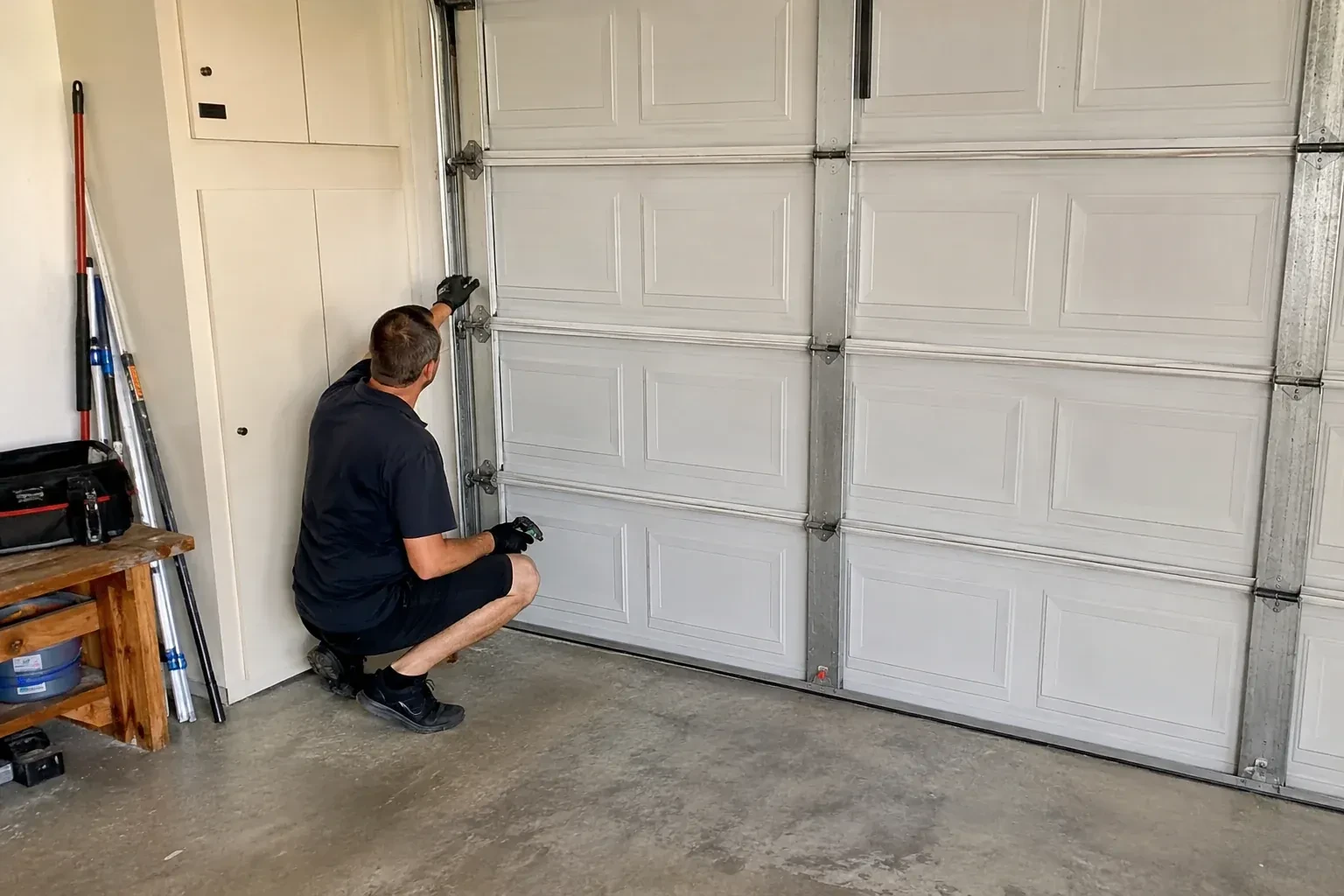
- The door lands with a thud you can feel through the kitchen floor, and sometimes it bounces back up a few centimetres before settling. The bottom section has a small dent where it keeps slamming the concrete.
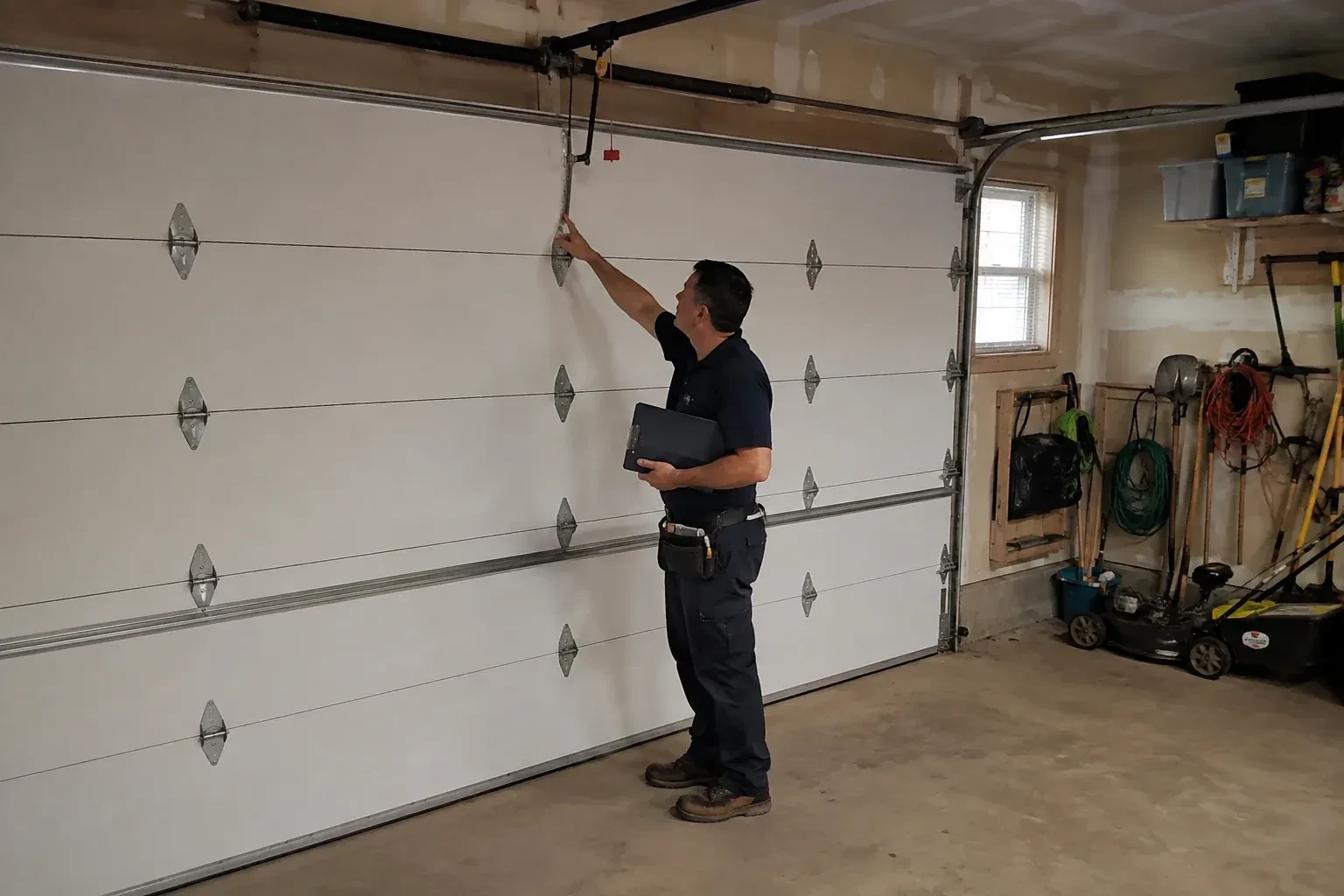
Since the first cold snap the door has been sluggish. It climbs slowly, hesitates near the top and the opener motor sounds strained.
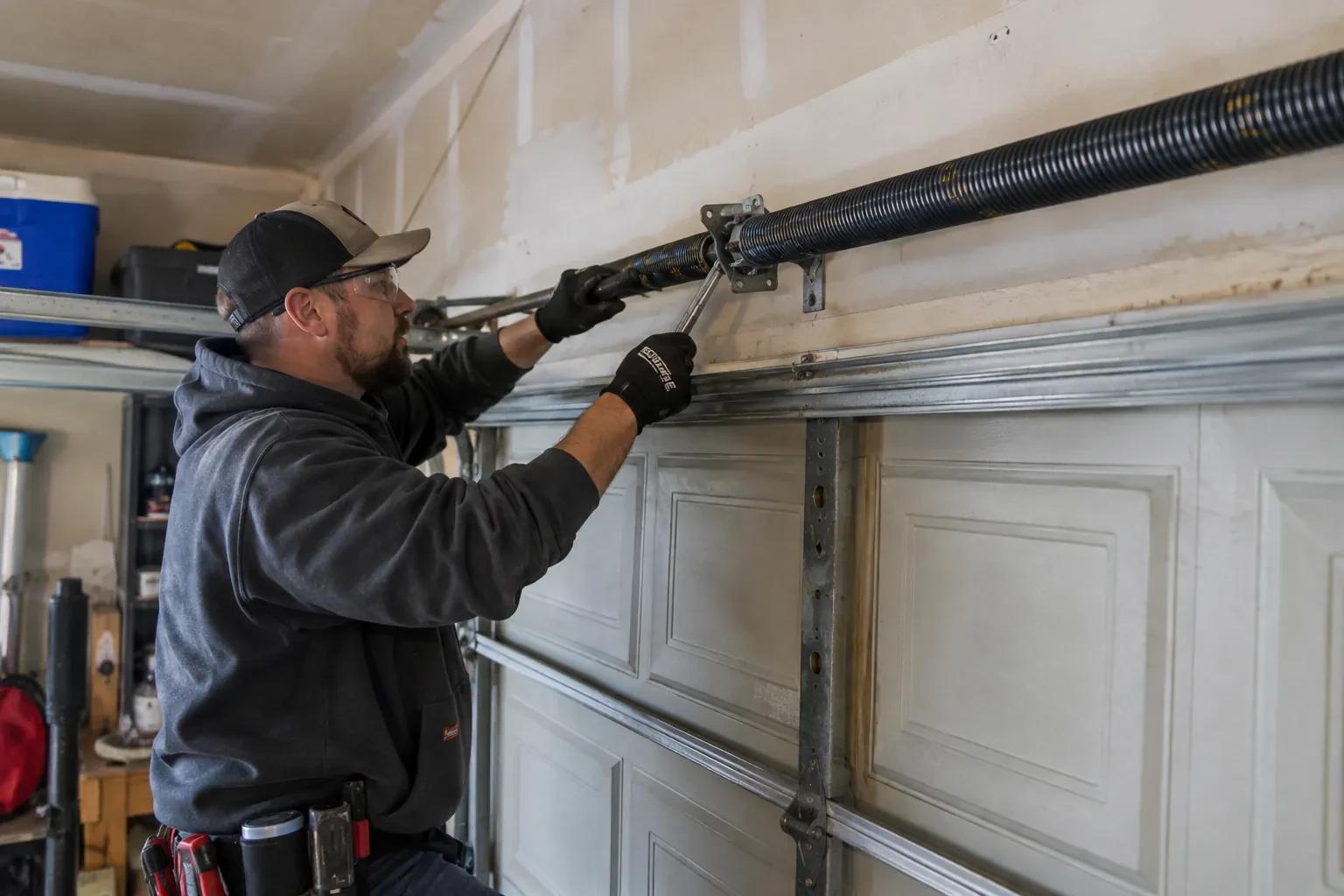
The heart of a tune-up is the balance check. Your springs are meant to carry nearly the whole weight of the door so the opener only has to guide it. When the door is disconnected from the opener and lifted by hand, it should rise without effort, stay open on its own and hold still partway. A door that sinks or feels heavy is telling you the springs have lost tension, and an opener made to move a balanced door is straining. The tune-up identifies this and treats spring adjustment as its own carefully done job, with the door clamped and proper winding bars.
Sound familiar?Toronto
Garage Door Tune-Up · Toronto
Scene 1
Noise is the most common reason a tune-up is booked, and every sound has an address. A high squeak that repeats with each section movement points to dry hinge pins. A rumbling that follows the door up and down usually comes from roller bearings. A sharp rattle at the top of travel is often a loose track bracket or hinge screw. A rhythmic slap along the ceiling is a slack chain on the opener rail. A pop or crack as the door starts is worth a closer look at the springs and drums. The technician places each sound, then checks that spot directly rather than lubricating everything and hoping.
Scene 2
A garage door moves hundreds of kilograms of steel through a curve twice a day, and the vibration works on every screw. The technician goes back along the list made during inspection and tightens hinge screws, track bolts, bracket lags and the fasteners at the opener header and rail. Stripped screws are replaced with the next size, and missing ones are filled. Track brackets are snugged with the roller-to-track gap preserved so nothing binds. The bottom brackets and anything anchored to the springs are deliberately left alone, since they hold the door's weight under tension; if one of those is loose it becomes a separate job with the tension safely released first.
Scene 3
You leave knowing how to run the same two tests the technician ran. With the door open, start it closing and wave a broom handle through the photo-eye beam: the door should stop and return fully open. Then lay a 2x4 flat on the floor under the centre of the door and close it: the door should reverse when it touches the board. Manufacturers ask for both tests monthly and after any adjustment. A door that stops on the board rather than reversing needs its down travel or force reset, which the record explains, and a door that fails again is a reason to call. The tests take two minutes and are the heart of a safe opener.
What shapes the quoteBedford Park Garage Door Experts
FeesSame any hour
Once a year suits most attached garages here, ideally in the fall before cold weather thickens lubricant and stiffens seals. Door and opener makers suggest lubrication every three to six months and a homeowner balance check and reversal test every month, so an annual professional visit sits on top of that light routine. A lightly used door in a detached garage may go longer; a heavily used one, or one exposed to salt spray, benefits from a spring check too.
Springs are inspected and lubricated during a tune-up, and the balance test tells us whether they are carrying the door's weight properly. Changing their tension is a separate, deliberate job: the door is clamped to the track, winding bars are used on a torsion spring, and the technician works from a stable position. If the balance check shows the springs need adjustment or replacement, you receive that as its own recommendation with its own quote.
For a single or double residential door with an opener, allow roughly an hour to two hours on site. The inspection and the two observed cycles take a fixed amount of time; the rest depends on how many fasteners have loosened, whether the sensors need realigning and whether you approve a small part replacement, such as a worn roller, during the same visit. Spring or cable work, if found necessary, is scheduled as its own job.
TorontoOntario
Garage Door Tune-Up · Bedford Park, Davisville, Lawrence Park, North Toronto
Every square is one home in a hundred.
On-site assessment
Since the first cold snap the door has been sluggish.
(365) 605-5927, open 24/7.
On-site assessment preferred · (365) 605-5927, open 24/7