Skip to content
BedfordPark Garage Door ExpertsOpen 24/7 (365) 605-5927
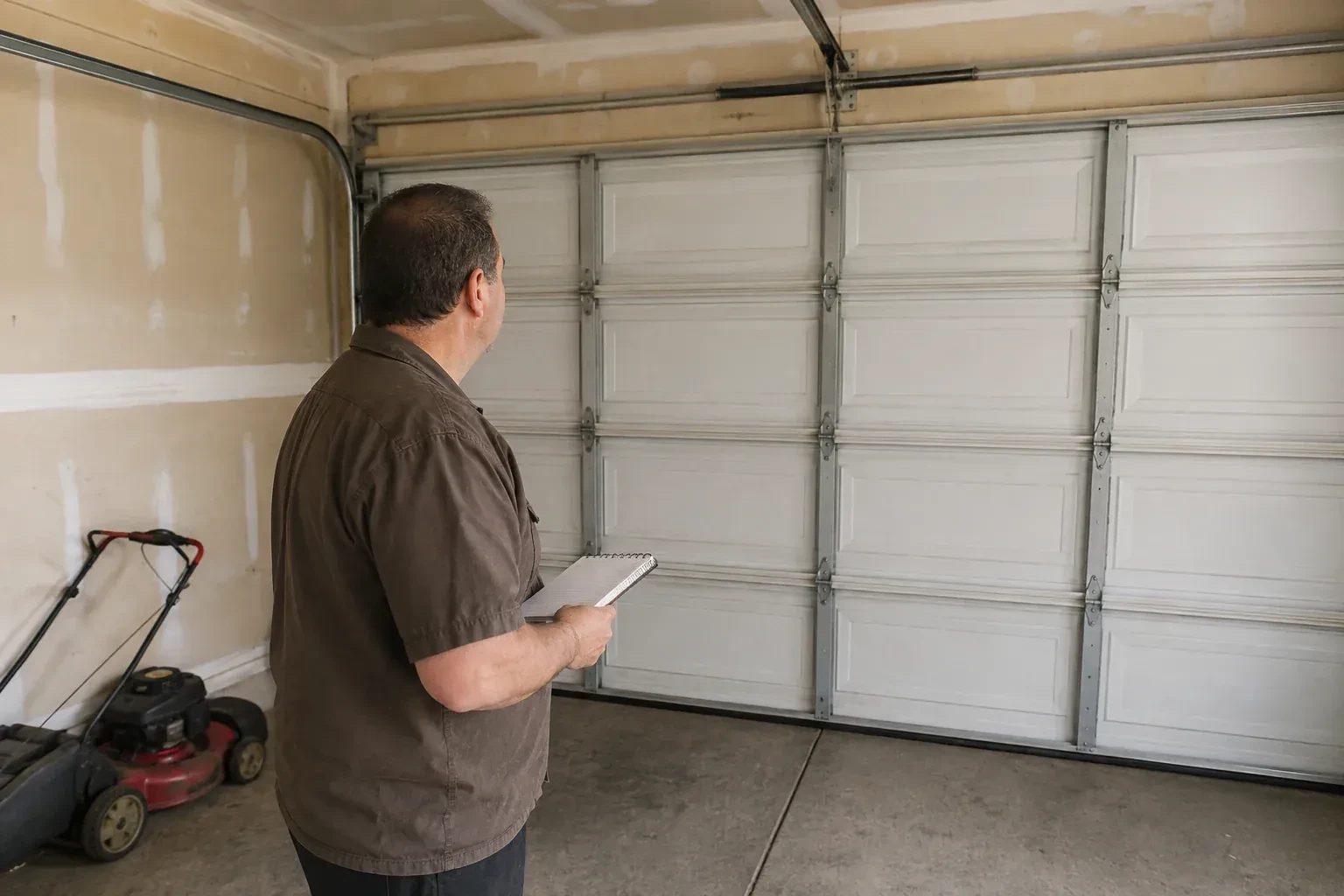
Technician holding a notebook while looking at a closed sectional door. — Garage Door Balance Adjustment, Toronto

Springs · Toronto

Garage Door Balance Adjustment

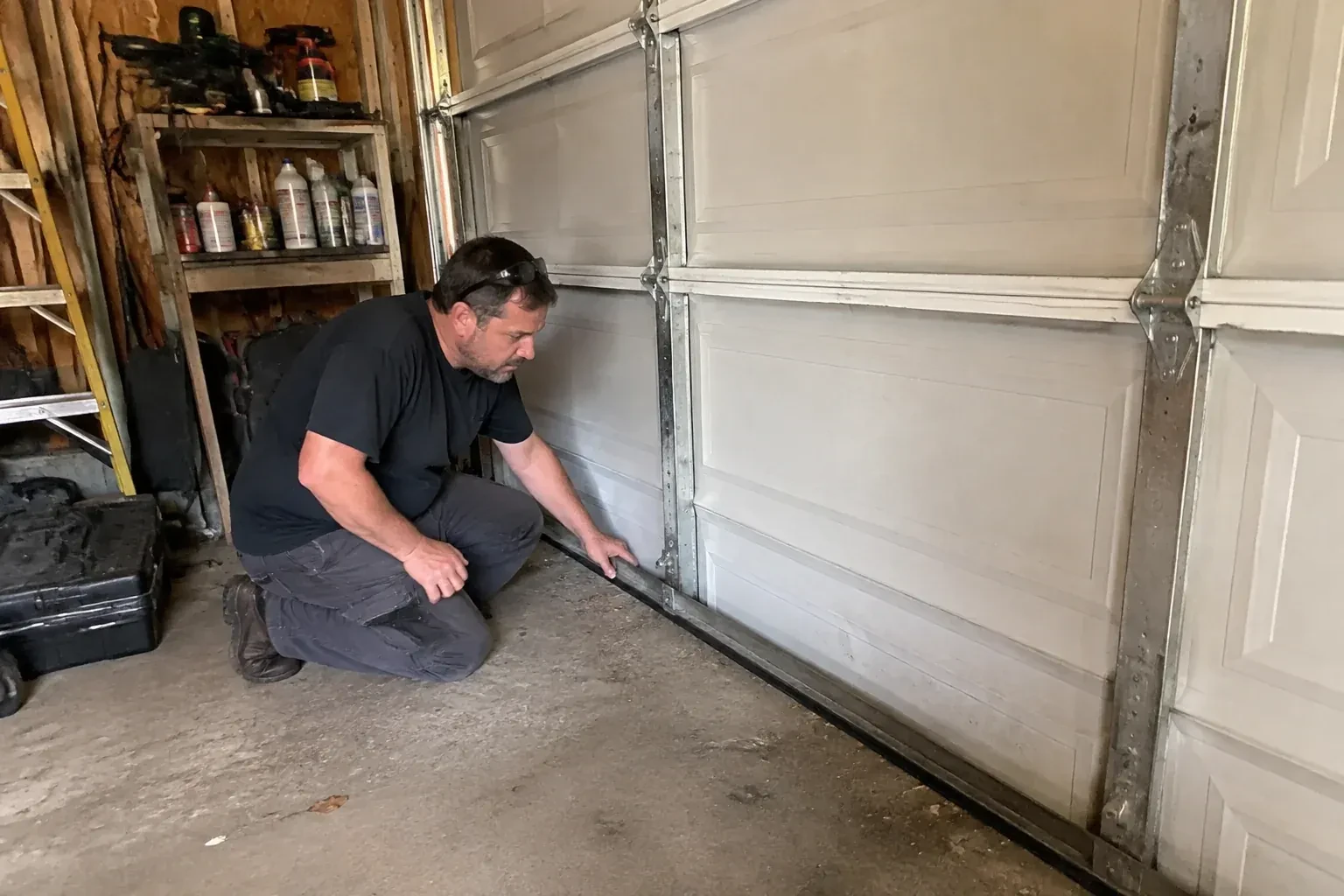
With the door closed, daylight shows under one bottom corner and the seal is squashed flat at the other. As it rises, the left side leads by an inch or two, and the top section twists slightly as it turns into the horizontal track.

In plain words

A balance visit follows a settled order. The technician first checks for a broken spring, displaced cable, binding or track damage; once safe to move, the door is run through a powered cycle, then released to repeat the movement by hand, separating the motor from the door. Springs, cables, drums, rollers, hinges and track are inspected before anything changes. Adjustment comes next, in small steps with a test after each one, until the door holds at every height and sits level. Finally the opener is reconnected, its settings reviewed against the newly balanced door, and the reversing safety tests run while you watch.
Sound familiar?Toronto

The call
Released from the opener, the door will not hold anywhere. Lift it to hip height, take your hands away, and it sinks back to the concrete, gathering speed on the way down. Two years ago it used to hover exactly where you left it.

NextHow the visit goes

Garage Door Balance Adjustment · Toronto

How the visit goes

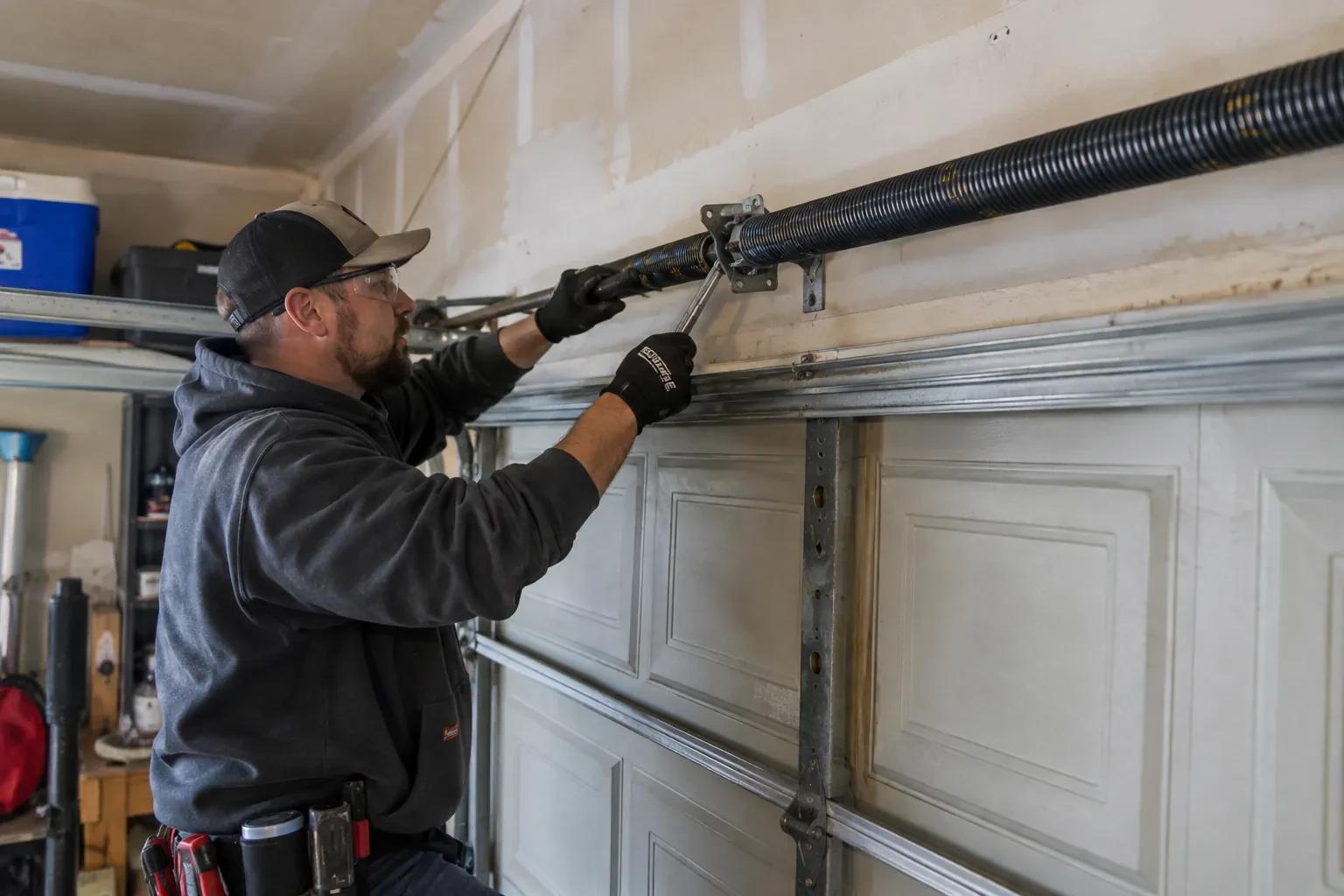
Technician in a black cap holding a wrench to a coiled black spring above a paneled door, with a blue cooler behind.
  1. Scene 1

    Friction along the path

    Some doors that feel heavy are not short of spring tension at all; they are dragging. The technician runs a hand and an eye along the vertical and horizontal tracks for dents, misaligned joints and brackets that have pulled away from the jamb, spins each roller to find seized bearings or cracked wheels, and flexes each hinge for play or splits. Dry, worn rollers alone can add real effort to every lift. Binding at one point in the travel, rather than heaviness everywhere, is the signature of a friction problem, and correcting it first means the springs are then adjusted to the door's true weight rather than to the drag.

  2. Scene 2

    Proving the result with the safety tests

    The visit is finished only when the standard tests pass. The technician places a piece of two-by-four flat on the floor in the door's path and closes it with the wall button; the door must strike the wood and return to fully open. Then, with the door closing again, an object is passed through the photo-eye beam, and the door must reverse. Finally the door is released once more and the hand test repeated so you can see it hold at knee height, at waist height and fully open. These are the same checks the door industry's own maintenance checklist uses, and you are welcome to watch each one.

  3. Scene 3

    A record of the setting

    Before leaving, the technician tells you how the door was set: the number of turns on each torsion spring or the hook position on each extension spring, the spring dimensions, the door's measured weight if it was weighed, and any parts that were replaced. Writing this on a card by the opener or inside the manual saves a future technician from starting from scratch, and it gives a reference point if the door ever starts to drift. Springs age gradually, so a note that says the door held at a certain number of turns tells a later visit how far things have moved.

In the van

  • Replacement hinges
  • Track clamps or locking pliers
  • Torsion springs, matched pair
  • Garage-door lubricant
  • Containment cables

What shapes the quoteBedford Park Garage Door Experts

Door out of level
A door with one corner high needs its cables reset on the drums before the tension is set, which adds a step to the visit and is listed as its own item.
Commercial or oversized doors
Doors wider or heavier than a standard residential opening use heavier springs, sometimes several on one shaft, and take longer to wind and test, which the quote reflects.
Whether a second person is needed to support the door
A heavier double door or one already sitting unevenly is sometimes safer to adjust with a second person steadying it while the springs are reset. That extra pair of hands is called in once the technician sees how the door is behaving on site.

FeesSame any hour

Have it ready

Before you call · 0 / 3

(365) 605-5927

What to expect, in questions

How long do garage door springs last?

Springs are rated in cycles, one cycle being an open and a close. A standard residential spring is commonly rated for around ten thousand cycles, which for a family using the door several times a day works out to roughly seven to ten years. Higher-cycle springs are available. As a spring nears its rating it loses tension, which is often why a balance adjustment is needed.

Why is one side of my door higher than the other?

Each corner hangs on its own cable, and if one cable has slipped on its drum, stretched or been wound with a different number of wraps, that corner sits at a different height. On extension doors, one spring stretched more than its partner does the same. The cables or hooks are reset so the door is level, then the tension is set. A level door also stops binding in its track.

Can a door with a broken spring be balanced?

A broken spring is replaced rather than adjusted; there is nothing left to wind. On a two-spring door the technician normally replaces both, since the survivor has the same age and cycle count, and then balances the door on the new pair. Until the visit, leave the door closed and avoid running the opener, which is not designed to lift the door's full weight on its own.

Torontoinformation

TorontoOntario

Garage Door Balance Adjustment · Bedford Park, Davisville, Lawrence Park, North Toronto

Town
Toronto
In business
31 years
Hours
Open 24/7
Nights, weekends and holidays, same fees
Visits
On-site assessment preferred. Request a visit or call.

2021 census: what it means at the door

Every square is one home in a hundred.

  • 58 in 100 homes · older homes
  • About 58% of homes in Toronto were built in 1980 or earlier, according to the 2021 Census.Hardware on an older door has often been through many winters: hinges with worn pins, rollers with tired bearings, bottom brackets rusted at the floor line. Replacing these in sets restores a smooth lift and takes a surprising amount of noise out of the garage.
  • Single-detached houses make up about 23% of homes in Toronto (2021 Census).In condominium communities the outward appearance of a garage door is often set by the corporation's rules, down to colour and panel style. We check what the board expects before ordering a replacement door, so the new one is approved and matches the row without a second conversation.

Source: Statistics Canada, Census Profile

Open Toronto in Google Maps

On-site assessment

Request a visit.

With the door closed, daylight shows under one bottom corner and the seal is squashed flat at the other.

(365) 605-5927, open 24/7.