Skip to content
BedfordPark Garage Door ExpertsOpen 24/7 (365) 605-5927
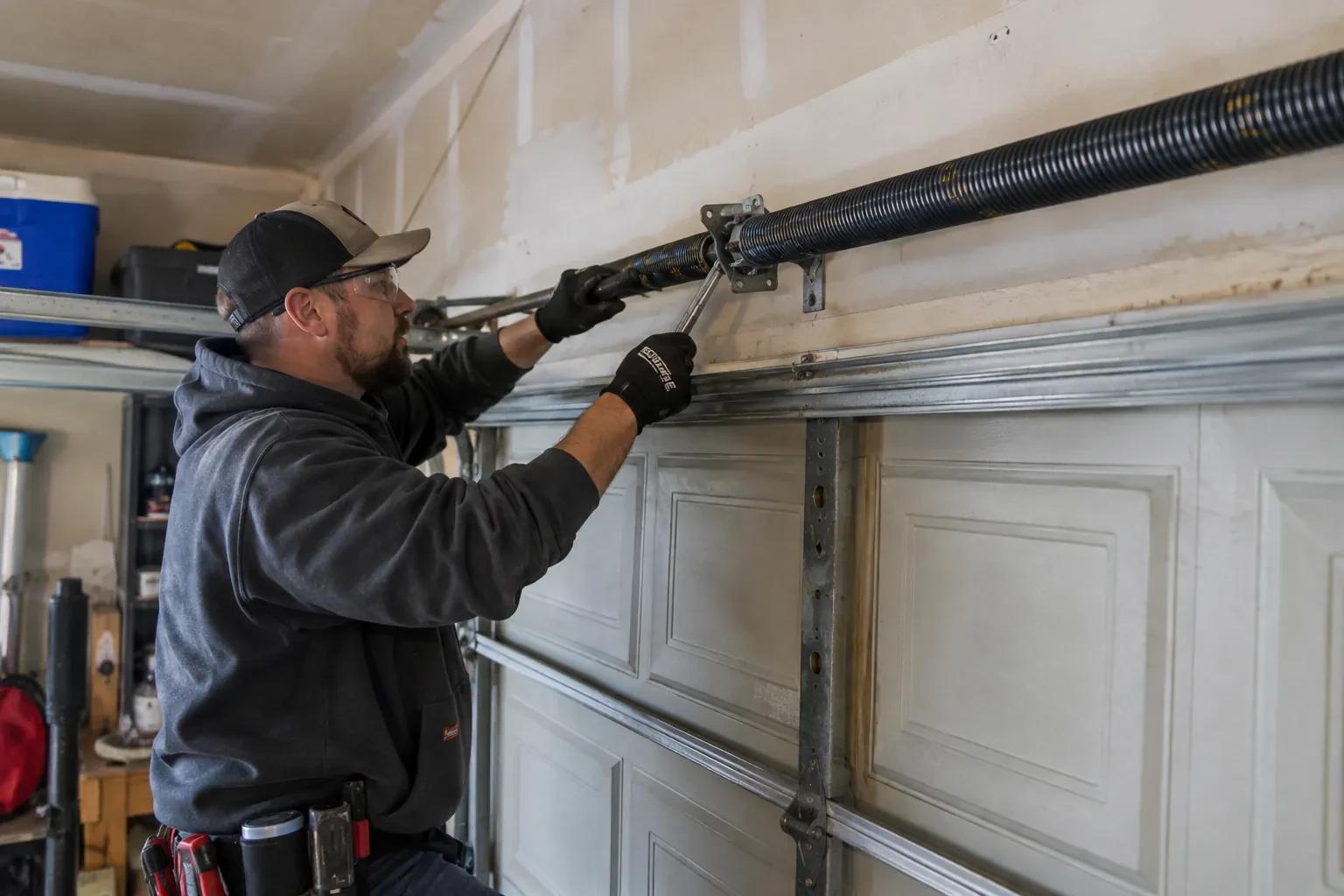
Technician in a black cap holding a wrench to a coiled black spring above a paneled door, with a blue cooler behind. — North Toronto

Openers · North Toronto

Smart Garage Controller Setup

One remote lives in a car you sold last spring. The other needs three presses from the driveway and its battery cover is taped on.

In plain words

For a household here, the most valuable feature is often the simplest: a message that says the door has been open for ten minutes on a January night. A garage attached to the house shares a wall with living space, and sometimes a water line; a door left up drains heat and invites a frozen pipe. Setup in this climate also means small choices that last: the sensor is mounted the way its own instructions specify, its battery is a lithium cell that tolerates an unheated space, and an auto-close schedule is paired with a left-open alert, since a schedule only attempts the close and does not confirm it finished.

Sound familiar?North Toronto

The call
There is a wireless symbol printed on the opener above the car, and the manual mentions an app, but the head unit has never been connected to anything. You downloaded the app once, it asked for a serial number and a network, and the moment passed.
NextHow the visit goes

Smart Garage Controller Setup · North Toronto

How the visit goes

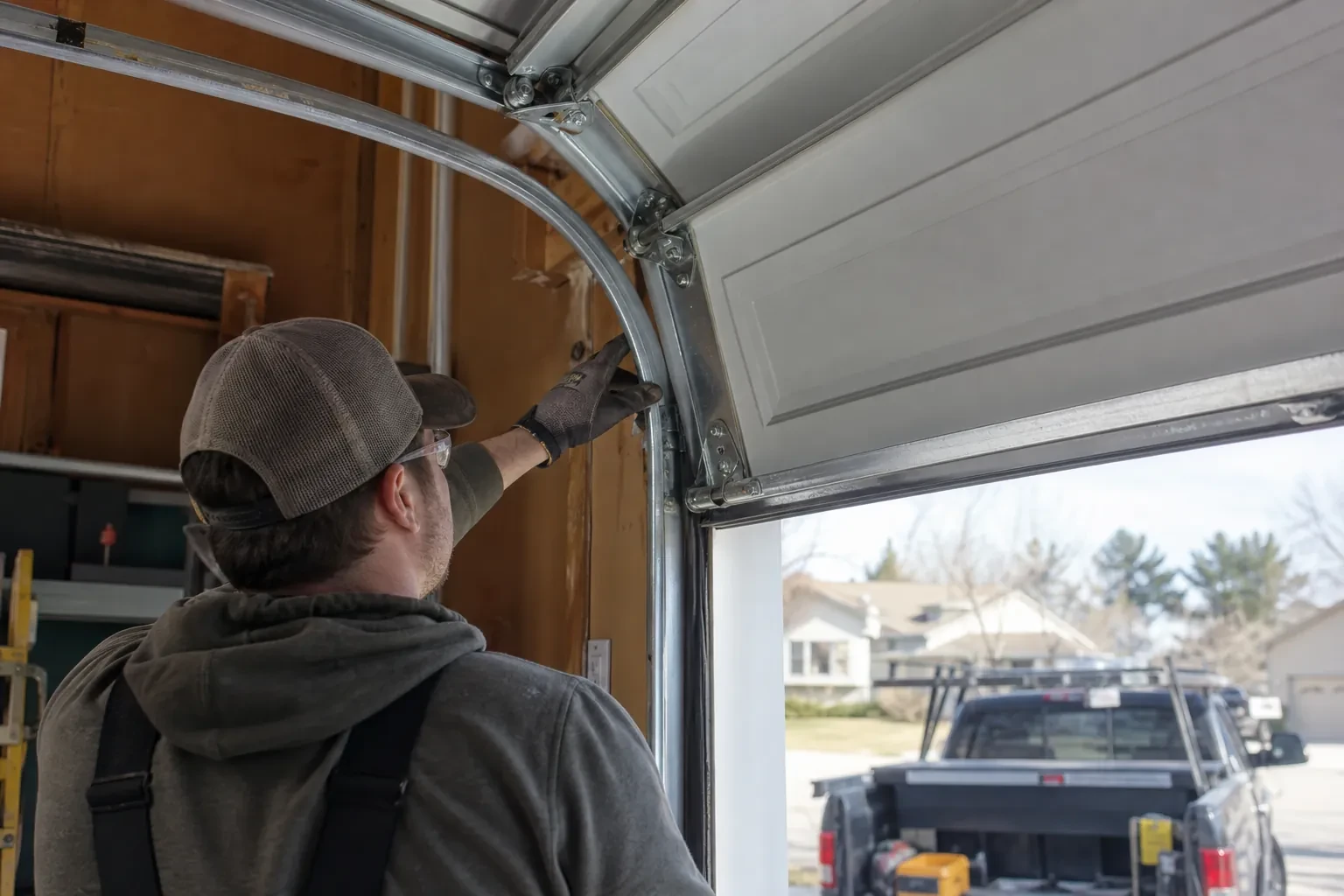
Technician in a mesh cap reaching a gloved hand to the curved door track beside a raised panel, with a pickup outside. — North Toronto
  1. Scene 1

    Where the sensor will sit

    The door-position sensor works by tilt, so it belongs on the inside face of the top door section, near a hinge line and clear of the opener arm, the lock bar and any handle. The technician checks the panel surface, since insulated steel and raised-panel wood doors have different flat spots, and checks the distance and line of sight to the hub. Homes with two doors need a sensor on each. On a door with a window section the sensor is kept away from the glazing frame. The battery type is noted, and the mounting follows the sensor maker's specified fasteners for this climate: screws, an adhesive strip, or tape as a temporary step before screws.

  2. Scene 2

    Joining the home network properly

    The hub is joined to the network on the 2.4 GHz band and to the exact network name the household uses every day, not a guest network that might later be switched off. The technician checks that the router's security is a modern type the hub supports and that the signal at the hub's final position is comfortably above the minimum. Where an extender or access point was planned, it goes in first so the hub joins a strong signal from the start. After the join, the hub's firmware update is allowed to finish, and the device is power-cycled once to prove it reconnects on its own without anyone touching it.

  3. Scene 3

    When the internet is down

    A dropped connection changes less than you might fear. Your wall console, remotes and keypad talk directly to the opener and keep working through any outage. What pauses is the phone side: status updates, alerts and commands from outside the house wait until the hub reconnects, which it does on its own once the router is back. If you change routers or rename your network, the hub needs to be walked through the join process again, using the same steps you watched during setup. The door itself, and the safety features on it, never depend on the cloud.

In the van

  • Wi-Fi access point or extender
  • A 2x4 offcut for the reversal test
  • Mounting screws and brackets
  • Cable clips and insulated staples
  • Door-position tilt sensor

What shapes the quoteBedford Park Garage Door Experts

Door sensor mounting
A flat steel panel takes the sensor in minutes. An insulated, raised-panel or windowed top section may need a bracket or a different spot, which adds a little time.
Door and opener condition
A heavy, binding or badly balanced door is corrected before a controller is added. That door-side work, from rollers to spring adjustment, is quoted on its own.
Built-in radio or retrofit hub
An opener whose wireless radio is already inside needs configuration and testing. An older opener needs a hub, a sensor, wiring or radio pairing and the same testing, which is a longer visit with hardware.

FeesSame any hour

Have it ready

Before you call · 0 / 3

(365) 605-5927

What to expect, in questions

What batteries does the sensor take, and how long do they last in a cold garage?

Most sensors take a coin cell or a pair of small cylindrical cells, specified by the maker. In a heated garage a battery commonly lasts a year or two; in an unheated one, expect less, and choose a lithium cell over alkaline because it holds its voltage in the cold. The app warns you as the battery runs down, and replacing it takes a moment and a fresh cell.

Can the door close itself at night?

Yes, with a schedule. You choose a time, and each night the controller sounds its warning, flashes its light and attempts to close the door if it is open; the close can fail if the beam is blocked, a sensor is faulty, or the controller is offline. Because it is unattended, the same safety rules apply: the door refuses or reverses if the beam is broken. Many households pair the schedule with a left-open alert so they hear about it either way.

What happens if my internet goes down?

Your wall console, remotes and keypad talk directly to the opener and carry on as normal, and the door's safety features are entirely local. What pauses is the phone side: status, alerts and commands from outside wait until the hub reconnects, which it does by itself when the router comes back. If you replace or rename your router, the hub is walked through the join steps again.

North Torontoinformation

TorontoOntario

Smart Garage Controller Setup · Toronto, Bedford Park, Davisville, Lawrence Park

Town
North Toronto, Toronto
In business
31 years
Hours
Open 24/7
Nights, weekends and holidays, same fees
Visits
On-site assessment preferred. Request a visit or call.

2021 census: what it means at the door

Every square is one home in a hundred.

  • 58 in 100 homes · older homes
  • About 58% of homes in Toronto were built in 1980 or earlier, according to the 2021 Census.Decades of freeze and thaw work on the concrete apron in front of an older garage, and an uneven floor means the bottom seal meets a gap on one side. A thicker seal or an adjusted threshold closes it and keeps snow and cold air out.
  • Single-detached houses make up about 23% of homes in Toronto (2021 Census).In denser housing the garage door is frequently the main entrance to the home and sits close to the living space, so a door that closes fully and locks properly matters for security. We check the closing force, the lock and the opener's stored codes on every visit.

Source: Statistics Canada, Census Profile

Open North Toronto in Google Maps

On-site assessment

Request a visit.

One remote lives in a car you sold last spring.

(365) 605-5927, open 24/7.